Why Industrial Data Unification Matters for Smart Manufacturing
Walking through a modern factory floor, you see sensors on conveyor belts, PLCs controlling robotic arms, and edge computing devices feeding live metrics into dashboards. Each piece of equipment talks, but they rarely speak the same language. This is where industrial data unification becomes the backbone of any serious Industry 4.0 initiative. Without it, you end up with a chorus of data silos, each singing its own tune, and no one can hear the symphony.
I spent years working with manufacturing plants that had invested heavily in digital transformation. They had SCADA systems from one vendor, ERP systems from another, and a growing fleet of industrial IoT sensors. The problem was never a lack of data. It was that data lived in separate worlds. Production data stayed in the SCADA silo. Inventory data stayed in the ERP. Quality metrics were scattered across spreadsheets. The result was a slow, painful process of manual exports, CSV shuffles, and endless meetings to reconcile conflicting numbers.
That experience taught me a simple truth: if you cannot unify your data in real time, you are flying blind. Industrial data unification is not just about connecting databases. It is about creating a shared language across your entire operation so that every decision, from a machine operator to the CEO, is based on the same live picture.
The Old Way: Patching Together Silos
Most factories start their digital journey by buying point solutions. One team deploys an OPC UA server to collect data from older PLCs. Another group chooses MQTT for a new set of environmental sensors. A third team uses Sparkplug to bridge their edge devices to the cloud. Each choice makes sense in isolation. But soon you have a stack of protocols, each with its own data format, timing, and meaning.
Data interoperability becomes a nightmare. The temperature reading from one sensor uses Celsius, another uses Fahrenheit, and a third sends a raw voltage that needs a conversion table. Time stamps drift because clocks are not synchronised. The result is that your real-time data is anything but reliable. You cannot trust the dashboard, so you end up walking to the machine to check manually. That defeats the whole purpose of digital transformation.

I have seen teams spend months writing custom connectors just to pull data from a few dozen machines. They build fragile scripts that break every time a firmware update rolls out. The maintenance burden grows until the data pipeline becomes a project of its own, draining resources from actual improvement work.
What Industrial Data Unification Really Means
When I talk about industrial data unification, I mean a systematic approach to making every data source speak a common, semantically understood format. It goes beyond plugging in a standard protocol. It means defining what each piece of data represents, how it is measured, when it was captured, and how it relates to other data points. This is the essence of semantic interoperability.
A Unified Namespace is the practical tool for achieving this. Think of it as a single, live directory where every data point in your plant is registered and accessible. Instead of each application having its own copy of the data, they all read from and write to this shared space. The Unified Namespace handles the translation between OPC UA, MQTT, Sparkplug, and any other protocol you use. It also enforces data governance rules, ensuring that only authorised systems can write certain values and that time-series data is stored with consistent timestamps.
One plant I worked with used AWS and Azure for different cloud services. The Unified Namespace sat between them, brokering data flows without locking them into a single cloud provider. That kind of flexibility matters when you are juggling multiple vendors and trying to avoid vendor lock-in. The same namespace handled edge computing nodes on the factory floor, so even when the internet went down, the local machines kept working with the last known good data.
Real-Time Visibility Changes Everything
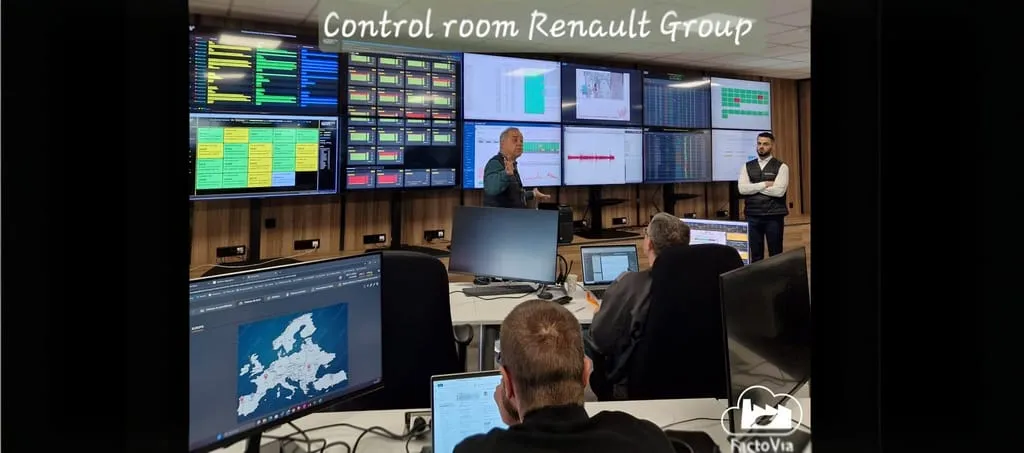
Once you have a unified view of your data, the possibilities open up. Operators can see a live feed of machine health, production throughput, and energy consumption on a single screen. When a bearing temperature starts climbing, the system can alert maintenance before the motor fails. That is predictive maintenance in action, and it only works because the data from the vibration sensor, the thermal camera, and the power meter are all available in the same namespace.
I visited a factory in Flanders that had implemented this approach. They were running a mix of old and new equipment. Their older machines spoke only Modbus, while newer ones used OPC UA. They had a few MQTT brokers for their environmental sensors. Before unification, their maintenance team spent half the day walking around with clipboards. After deployment, they could see every critical metric on a tablet. Downtime dropped by 18% in the first quarter. That is the kind of return that pays for the entire project.

Common Pitfalls and Trade-Offs
Industrial data unification is not a magic wand. It comes with trade-offs that you need to consider. The biggest one is data governance. When you open up access to real-time data, you also create new attack surfaces. Every device that publishes to the namespace needs authentication and authorisation. You have to decide who can write to which topics, who can subscribe, and how to handle stale or corrupted data.
Another challenge is handling the sheer volume of time-series data. A single machine can generate thousands of data points per second. Storing all of that in a unified namespace without proper filtering will overwhelm your network and storage. You need to decide what to keep raw, what to aggregate, and what to discard. That is a design decision, not a technical limitation.
I have also seen teams underestimate the cultural shift. Operators who are used to looking at their own SCADA screens may resist moving to a unified dashboard. They trust their local view. You have to involve them early in the design, show them how the unified data gives them better context, and let them customise their own views. If you try to force a new system on them, they will find ways to work around it.
Practical Steps to Get Started
If you are considering industrial data unification for your plant, here are a few steps I have seen work in practice:
- Start with a data audit. Map every source of data in your facility, including its protocol, update frequency, and format. Do not forget manual entries and spreadsheets.
- Pick a small, high-value use case first. Maybe it is unifying data from a single production line or a set of critical machines. Prove the concept before scaling.
- Choose a Unified Namespace platform that supports the protocols you already use, such as OPC UA, MQTT, and Sparkplug. Make sure it can handle edge computing scenarios where connectivity is intermittent.
- Invest in data governance from day one. Define who owns each data point, what access controls apply, and how data quality is maintained.
- Train your team on the new workflows. Show them how unified data helps them do their jobs better, not just adds a new tool to learn.
The Bigger Picture
Industrial data unification is a foundational piece of smart manufacturing and Industry 4.0. It enables everything from predictive maintenance to real-time supply chain adjustments. Without it, digital transformation stays stuck in pilot projects that never scale. With it, you build a single source of truth that everyone trusts.
The companies that get this right are the ones that treat data as a strategic asset, not a byproduct. They invest in the infrastructure to unify it, govern it, and make it accessible to the people who need it. That is the difference between a factory that reacts to problems and one that anticipates them.
If you are still running separate systems for SCADA, ERP, and industrial IoT, start thinking about how you can break down those walls. The technology is mature. The protocols like OPC UA, MQTT, and Sparkplug are proven. What is missing is the will to unify. And that is something only leadership can provide.